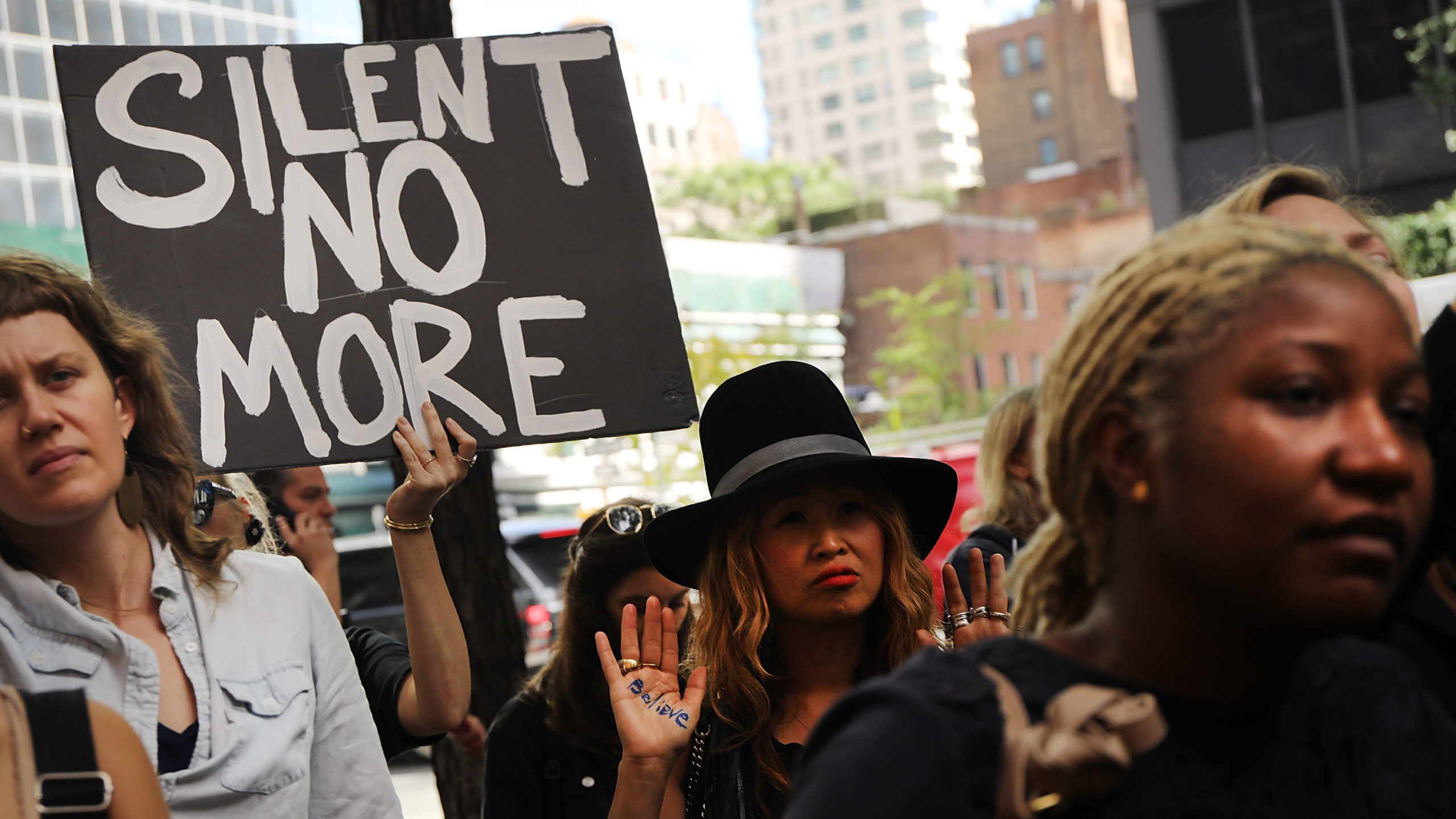
Some anniversaries are hard to celebrate. How should we greet the arrival of October, a year after the stories broke initiating the reckoning that soon became known as #MeToo? Since TheNew York Times and TheNew Yorker published their exposés — on Oct. 5 and Oct. 10 of last year, respectively — of Hollywood producer Harvey Weinstein’s long career as an alleged serial rapist, a new nationwide discussion has formed about sexual assault, abuse and harassment. Often, this ongoing reckoning feels like not a dialogue, but a war. It has upended lives — most of all, the lives of the women who’ve come forward with their stories for the first time. It’s brought to light the horrific misogyny that some men hold within their hearts, as they have smeared their hateful words all over the Internet. At the same time, it’s torn friends and families apart as part of the frightening process of dismantling fundamental ideas about what it even means to be a “man” or a “woman,” about what constitutes intimacy and violation and about who deserves protection when the ground of our assumptions is slipping out from under us. The process often feels exhausting, liberating, urgent, impossible — and impossible to ignore.
In what felt like an almost unbearably cruel case of cosmic timing, the spirit of #MeToo surged again as its one-year mark coincided with the Senate Judiciary Committee’s hearings around Brett Kavanaugh’s nomination to the Supreme Court. Millions heard the testimony of Christine Blasey Ford that Kavanaugh described an attempt to sexually assault her when they were in high school, and we witnessed this singular women become a symbol right before our eyes – a hero and a pariah, a flag in a battle waged over mothers’ fears, watered by a man’s tears and obscured by the smoke of each witness’s own beliefs and illusions. It has been deeply disheartening to confront, yet again, the ways in which the same culture that engendered some of our most familiar and treasured ideals — of teen romance, or masculine authority, or feminine openness — serves the power of some at the expense of others. And it has been necessary, but so painful, to hear more and more women’s voices amplified, speaking about what they have endured so that those ideals can be maintained.
Anyone who calls herself a feminist knows, however, that this is just life –- the experience of going on, of even finding ways to be strong and kind and free, when the world is burning around you. (And, in your mind, might even deserve to burn.) It’s something women have been talking about in songs since the dawn of popular music.
This weekend, I needed some edification within what was starting to feel like an unbearable struggle. So I did what I always do: I turned to music. I made a playlist. I called it “fed up,” and started seeking out songs of women saying they’d had enough, that from this moment on things would be different. And if they couldn’t be different, then just listen to this.
I began at one of popular music’s beginnings: the women’s blues of the 1920s, in which, as Angela Y .Davis writes in her great study of the genre, “the problem of male violence is named, and varied patterns of implied or explicit criticism and resistance are woven into the artists’ performance of them.” Ma Rainey’s “Cell Bound Blues” starkly outlines one such encounters, which lands the woman, whose resistance involves a gun, in jail. Country music’s beginnings also highlight women’s resistance: in “Single Girl, Married Girl,” a folk song notably recorded without the presence of the family patriarch A.P. Carter, his bride Sara sings of the limits imposed by the ring on her finger. And then there’s vaudeville great Sophie Tucker, totally owning the lyrics written for her by Billy Rose in “I’m Not Taking Orders for No One.” Moving toward the mid-20th century, I discovered the beautifully cynical “This Will Make You Laugh,” written by Irene Higginbotham — one of Tin Pan Alley’s few African-American songwriters — and revisited Billie Holiday’s stark declaration of independence, “God Bless the Child.”
My search for women’s angry or stone cold self-assertion yielded even greater results as I moved forward in time. Some songs I found were hits, like “No More Tears (Enough is Enough),” the firestorm of duet between Barbra Streisand and Donna Summer; others, like X-Ray Spex singer Poly Styrene’s scream of self-definition, “Oh Bondage! Up Yours!” Then there are the forgotten gems, sometimes taking on not just individual men or even the strictures of romance, but the larger culture that continually puts women at risk. Dory Previn’s amazing “Obscene Phone Call” and “Conversation With a Cop,” by the all-woman band Fanny, exposed how the authorities can alternately ignore and harass women. Martina McBride’s “Independence Day” and Rosanne Cash’s “Rosie Strike Back” opened country fans’ eyes to domestic violence. By the time we get to the 21st century, Alynda Segarra of Hurray for the Riff Raff is calling out the American songbook itself, rewriting the soul-damaging script of the murder ballad in “The Body Electric.”
Some of the songs on this playlist use the language of failing romance to express the bigger need for personal agency and freedom. Others confront harassment or other ways women have been treated as less than human. Some are funny; others tap into anger so hot it’s hard to listen to them. Many were written or recorded by young women finding their power in the moment. Others come from weathered voices, sharing wisdom. At four hours, I stopped compiling, but I could have kept going indefinitely, I think. What would you add? We need this soundtrack: a way of saying “no way” that’s really inspiration to keep going on.



9(MDQ0ODU2MzU2MDE1NTM3MTIwMjFiMDhjNA000))