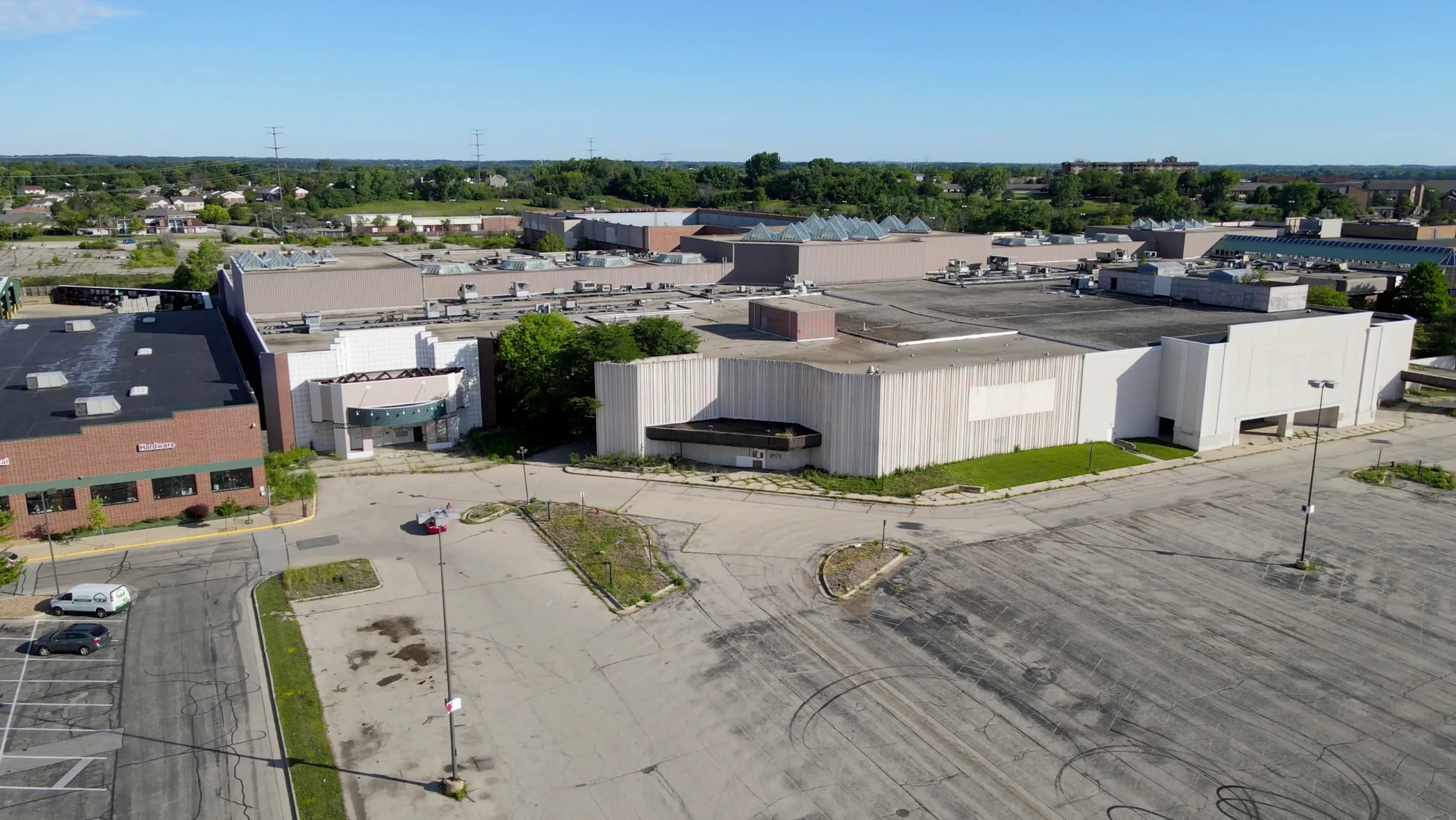
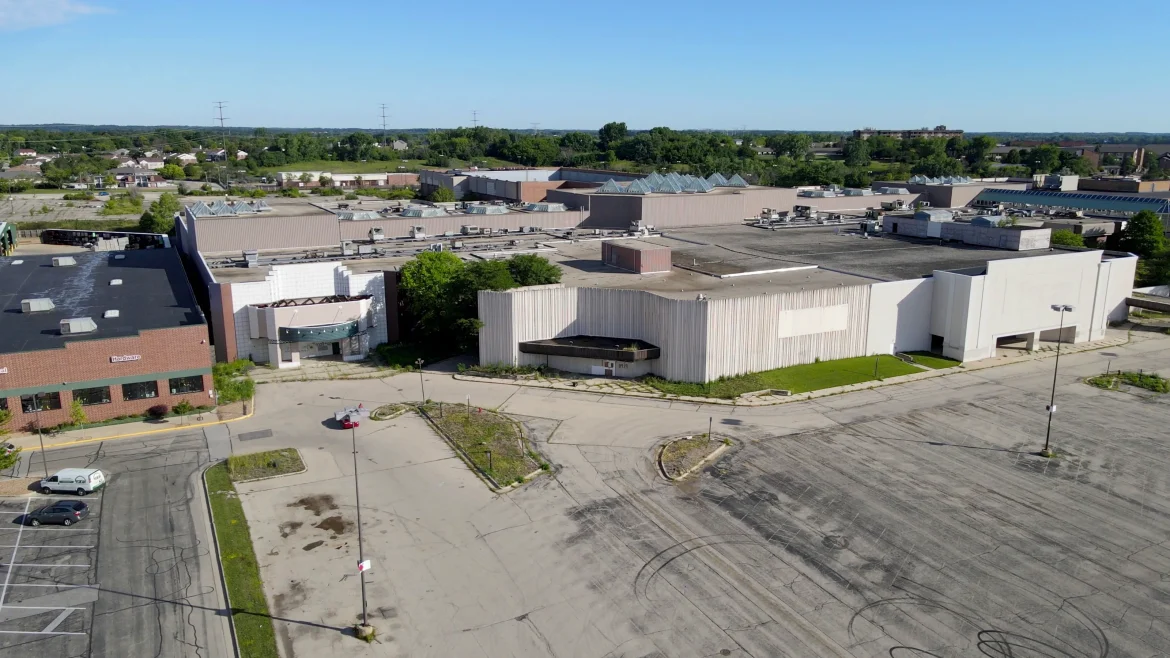
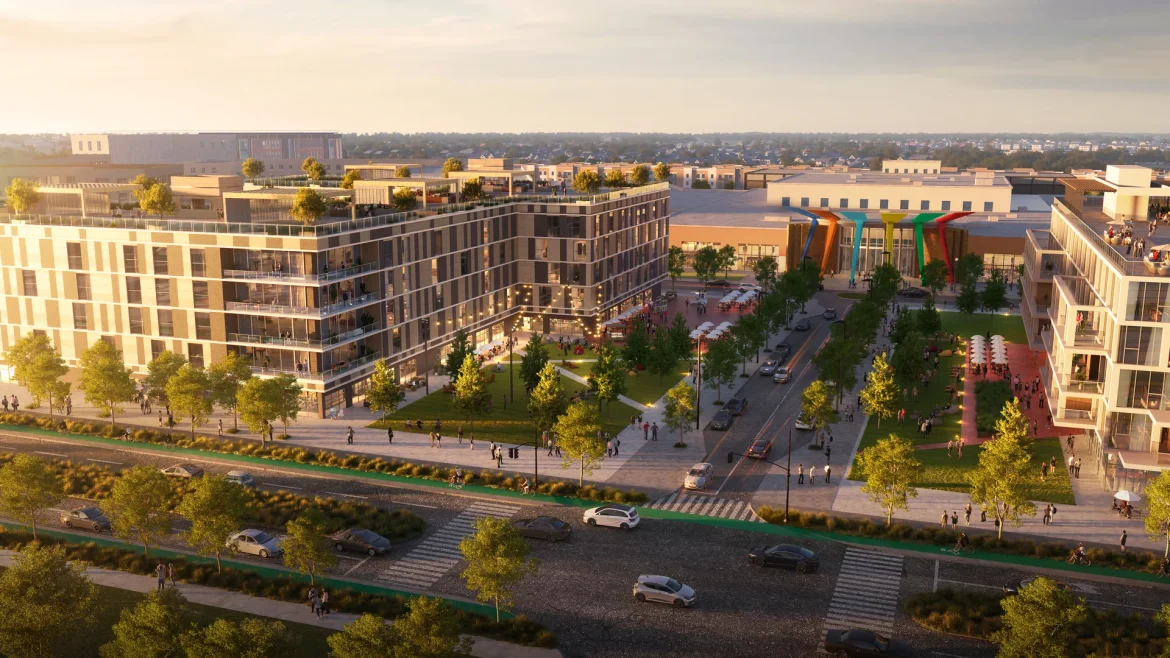
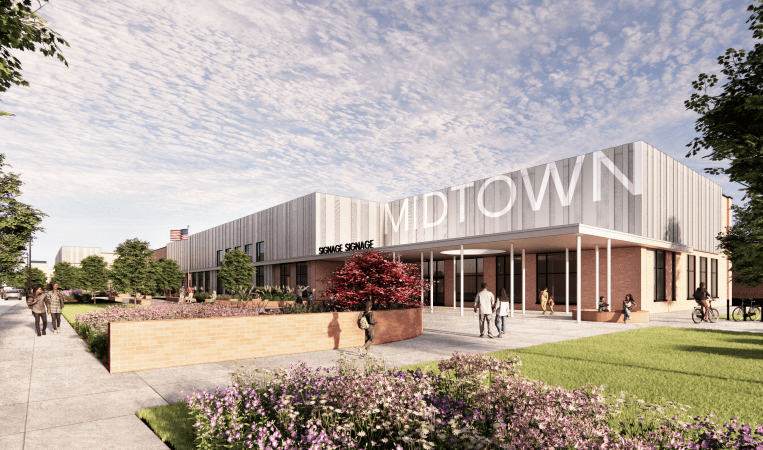
Milwaukee officials are preparing for an open-house event on March 19, when community members will learn about the future of the former Northridge Mall site, now known as Granville Station. The meeting represents the next step in the redevelopment process that began after the city acquired the property through tax foreclosure in January 2024.
With asbestos removal completed and demolition of the Boston Store portion in progress (thanks to a $15 million grant from Governor Tony Evers in 2023), the city is moving forward with plans to convert this vacant retail property into a community asset. The demolition is expected to be completed by fall 2025, establishing the foundation for a redevelopment that could affect the Granville neighborhood for years to come.
The process builds on previous planning efforts, including a design charrette — or collaborative workshop — that brought together architects, city officials, business leaders, and community members to consider possibilities for the site.
The March 19 meeting offers residents an opportunity to engage with the rebranding of the site as “Granville Station” and provide input on its future as a potential economic contributor for Milwaukee’s northwest side, including possible housing options that could address homeownership disparities in the city.
The History of Northridge Mall: A Retail Legacy
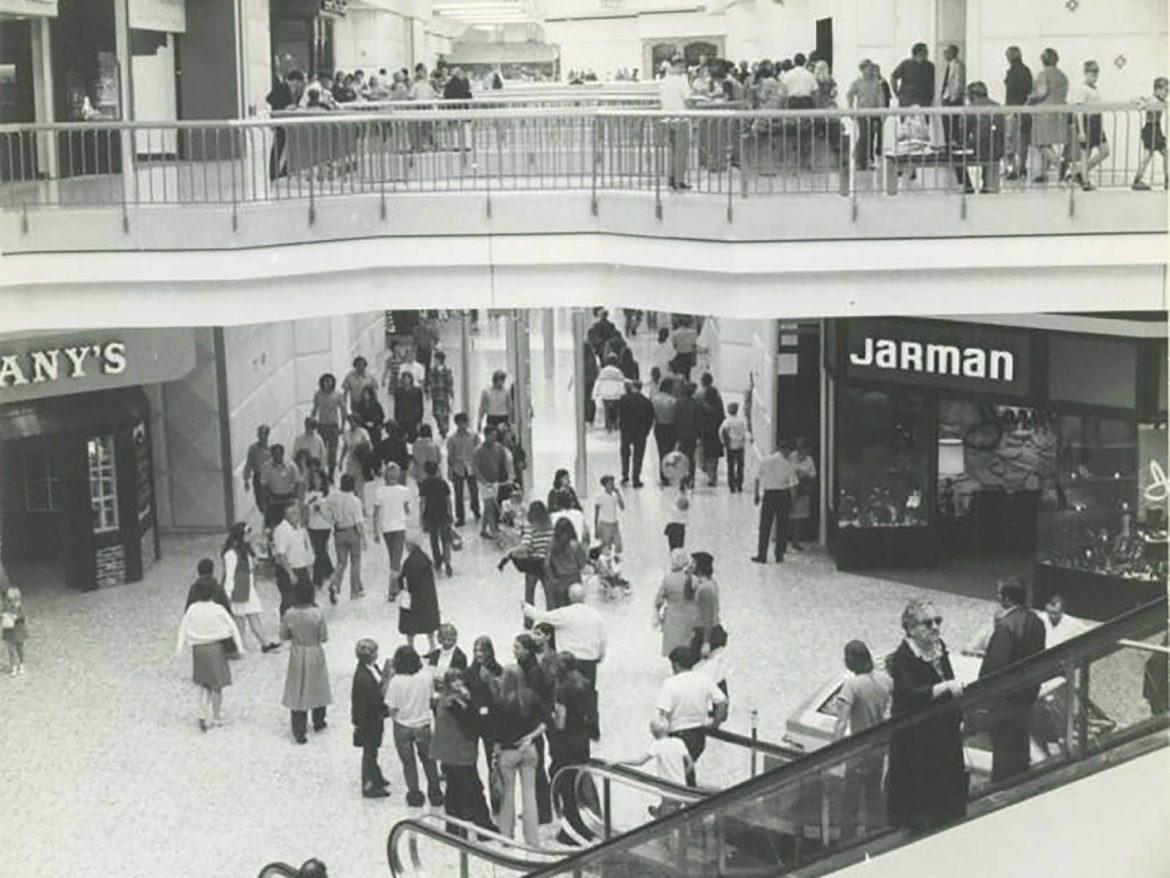
Northridge Mall opened Aug. 14, 1972, as a shopping destination developed by Taubman Centers and financed by Senator Herb Kohl. The mall was part of a coordinated development strategy that included the nearby Northridge Lakes residential community, designed to create a “suburb within the city” experience on Milwaukee’s Northwest Side.
Source: Milwaukee Public Library
With four anchor stores — JCPenney, Sears, Boston Store, and Gimbels — the mall operated as a regional retail center, complemented by a United Artists Theatres complex. The mall’s development reflected the automobile-oriented patterns common throughout the Northwest Side of Milwaukee, characterized by large signage, minimal landscaping, extensive parking lots, and limited pedestrian facilities.
The mall’s decline began in the late 1990s, when Younkers, which had replaced H.C. Prange Co. (formerly Marshall Field’s, originally Gimbels), closed in 1999. This marked the beginning of a downward trend that led to the mall’s complete closure in 2003. Several factors contributed to this decline, including competition from other shopping areas such as Mayfair Mall, Bayshore Mall, and retail centers in Menomonee Falls and Mequon.
The cancellation of a planned northern beltline freeway during the freeway revolts of the 1970s also affected accessibility to the mall, distancing it from the broader Milwaukee metropolitan area. As online shopping became more common and consumer preferences changed, Northridge Mall, like many retail centers across America, struggled to adapt to market conditions and eventually closed.
The Granville Design Charrette: A Community Vision
In response to the challenges facing the Granville neighborhood, Community Design Solutions (CDS) facilitated a day-long design charrette that gathered various stakeholders at the UW-Milwaukee School of Architecture and Urban Planning to reconsider the area’s future.
This collaborative process, directed by Carolyn Esswein with support from CDS staff, involved reviewing the Strategic Action Plan for the neighborhood, examining business diversity, and conducting focus groups with lenders, developers, residents, city officials, agency leaders, and business owners. Six teams of architects were assigned to different “Opportunity Sites” in the neighborhood, with Northridge Mall designated as Site 5.
The process aimed to transform Granville into an area capable of attracting businesses and customers. The resulting designs reflected an understanding of the area’s demographics, land use patterns, and economic conditions, considering the industrial and manufacturing base that continues to operate in the Northwest Land Bank despite retail decline.
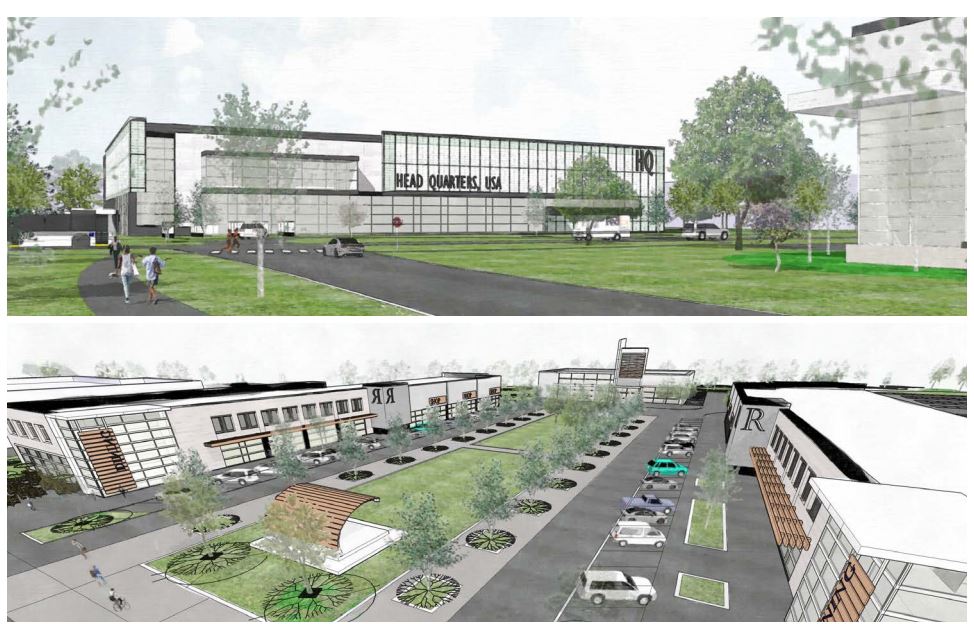
Uihlein: From top to bottom: potential new light industrial development; public plaza with commercial, maker-spaces, or retail uses
For the Northridge Mall site specifically, Uihlein Wilson Architects offered a redevelopment concept that considered economic feasibility and community needs. Their proposal suggested creating a neighborhood campus around the original mall complex that would support multiple businesses while incorporating public and commercial spaces.
The plan maintained the existing mall building for a large light-industrial business, created multiple new development opportunities, rethought the road system, established a public plaza, and even accounted for a park and neighborhood soccer field. This approach reflected the charrette’s goal of creating a multi-functional space to serve community needs while supporting economic development.
National Trends: How Other Communities Are Transforming Former Malls
Across the United States, communities are finding ways to give new purpose to closed shopping malls, providing examples for Milwaukee’s Northridge redevelopment.
According to a 2023 analysis by real-estate services firm Jones Lang LaSalle (JLL), approximately 46% of mall redevelopments are mixed-use projects incorporating at least three different uses, with 85% retaining some retail component. The most common redevelopment uses are residential and office space, with nearly 54% of projects including housing elements and 35% incorporating office uses.
This trend reflects a recognition that single-purpose retail malls are increasingly difficult to sustain as shopping continues to shift online, necessitating a change into multi-purpose destinations that combine office, residential, and cultural amenities.
Mall transformations across the country demonstrate the potential of redevelopment approaches. Twelve miles from the Granville site in Milwaukee, the former Grand Avenue Mall has been transformed into an apartment complex called the Plankinton Clover, where former storefronts now serve as entrances to apartments and a shared pickleball court occupies what was once a shopping concourse.
In Minneapolis, the former Brookdale Mall has been redeveloped into “Shingle Creek Crossing,” featuring retail, office, and residential space; a medical office building; a 100-unit affordable housing complex; and green spaces with walking trails. In Phoenix, the Paradise Valley Mall has recently added 400 residential units, while Indianapolis’s Lafayette Square Mall plans to incorporate 1,200 apartments by 2025, including affordable options in a former Sears location.
These examples illustrate the various possibilities for mall redevelopment, from housing to office space to community amenities, providing insights for Northridge’s future.
The Housing Potential: Community Land Trust Model for Homeownership
As a current ACRE (Associates in Commercial Real Estate) program student, I’ve been thinking about innovative uses for the Granville site. One practical aspect of mall redevelopment is its potential to address housing needs and homeownership disparities. In Milwaukee, Black homeownership rates have consistently lagged behind those of white residents, with some estimates indicating that Black homeownership in the city is below 30%, compared to more than 50% for white residents.
This gap represents one of the most significant racial disparities in the U.S. housing market. The redevelopment of the Northridge site presents an opportunity to thoughtfully address this disparity through an innovative approach: partnering with the Milwaukee Community Land Trust to develop affordable workforce housing.
A community land trust operates through a model where the nonprofit organization maintains land ownership while selling homes built on that land to qualified buyers. This separation of land ownership from home ownership significantly reduces the purchase price, making homeownership accessible to those who might otherwise be priced out of the market.
When homeowners decide to sell, the resale price is typically restricted, ensuring the homes remain affordable for future buyers while still allowing the original homeowners to build equity. This model creates permanently affordable housing while providing a pathway to homeownership for families with modest incomes.
The growing interest in smaller housing options like micro homes and cottages makes them particularly suitable for a community land trust development at the Northridge site. Recent research shows that 73% of Americans would consider living in a tiny home, with Gen Z and Millennials showing the most interest at 75%. These demographic shifts are reshaping housing demand, with younger generations delaying homeownership due to economic pressures and student loan debt, while the aging population seeks housing with accessibility features and proximity to services. The top reasons people consider tiny homes include affordability, desire for a minimalist lifestyle, and recognition that they don’t need a large living space.
For the Northridge site, a portion of the land could be developed as a community-oriented residential area inspired by successful projects like Atlanta’s Union Park Cottages. This development features cottage-style homes arranged around shared green spaces, creating an efficient use of land while fostering community connections.
Atltana’s Union Park CottagesUnion Park Cottages
The homes are designed to be modest in size but high in quality, with energy-efficient features that reduce utility costs for residents. Adapting this model to the Northridge site could create a distinctive residential community that addresses housing needs while contributing to the site’s overall transformation.
What makes this proposal particularly innovative is the potential for integrating the residential community with commercial and retail spaces. The development could include cafes, co-working spaces, and other small businesses serving residents and visitors.
Through a revenue-sharing arrangement, homeowners in the community land trust could receive a portion of the income generated by these commercial spaces, creating an additional avenue for wealth building beyond home equity. This approach provides a sustainable model for community development that benefits residents directly while contributing to the site’s overall economic vitality.
Incorporating this type of housing development could help Milwaukee’s Northwest Side address the persistent racial gap in homeownership. By creating affordable pathways to homeownership through the community land trust model, the Northridge redevelopment could provide opportunities for Black families and other historically underserved communities to build wealth through property ownership.
The development’s focus on workforce housing acknowledges the area’s strong industrial base. It aims to create housing opportunities for people employed in these sectors, strengthening the connection between housing and employment in the Granville neighborhood.
Challenges and Considerations for Northridge’s Transformation
Despite the examples from around the country, redeveloping the Northridge site presents challenges that need to be addressed — perhaps none bigger than financing. Successful transformations often require solutions that combine public, private, and philanthropic funding sources.
For a community land trust component, additional resources such as grants for affordable housing development, down payment assistance programs, or other supportive mechanisms may be necessary to establish the model and ensure new housing units are accessible to families with modest incomes. These approaches can help overcome the financial barriers to homeownership that have contributed to Milwaukee’s substantial racial gap in homeownership rates.
Implementing a community land trust model also requires careful planning and community engagement. Potential homebuyers need education about how the land trust model works, as it differs from traditional homeownership. The development’s design must balance affordability with quality, creating attractive and durable homes while remaining within reach of target buyers.
The commercial components must be carefully planned to ensure they serve community needs and generate sufficient revenue to make the revenue-sharing arrangement meaningful for homeowners. Despite these challenges, the potential benefits of creating affordable homeownership opportunities while building community wealth make this approach worth considering as part of the broader Northridge redevelopment vision.
Patient capital is necessary, as mall redevelopment projects represent long-term investments that may not yield immediate returns. These projects typically require public-private collaborations that achieve community development goals while preserving commercial value for property owners.
For Northridge, successful redevelopment will depend on addressing these challenges through problem-solving, partnerships, and a long-term perspective on community investment that includes creating equitable housing opportunities.
The Path Forward for Northridge and Milwaukee
As Milwaukee continues the demolition of Northridge Mall and advances planning for its future as “Granville Station,” the city is at an important point in its urban development. The upcoming open-house meeting March 19 offers an opportunity for community input into this process, building on the foundation laid by the Granville design charrette and subsequent planning efforts.
Drawing insights from mall redevelopments across the country, Milwaukee has the potential to create a mixed-use district that addresses housing needs, provides employment opportunities, offers community amenities, and contributes to economic growth in the Granville neighborhood, while also addressing the city’s persistent racial disparities in homeownership.
The potential inclusion of a community land trust component in the redevelopment plan represents an approach that could directly address homeownership disparities while creating a distinctive community within the broader Northridge site. By combining affordable homeownership opportunities with shared green spaces and integrated commercial facilities, this model could create a sustainable, wealth-building community that serves as an example for future developments.
The revenue-sharing arrangement between commercial spaces and homeowners provides an innovative mechanism for community wealth building beyond traditional affordable housing approaches. By considering these spaces as integrated communities where people can live, work, and gather, cities like Milwaukee are adapting to current urban needs while reusing underutilized assets.
The success of this effort will depend on collaboration among government agencies, private developers, community organizations, and residents, all working toward a shared vision for the site’s future.
Every Saturday from 10 pm - Midnight CST, In the Mix from Radio Milwaukee provides our listeners with a premier mix show that showcases the many talented DJ's here in the city of Milwaukee. We specialize in Electronic Dance Music spanning several genres; House, Deep, Tech, Drum N Bass, Trap and more