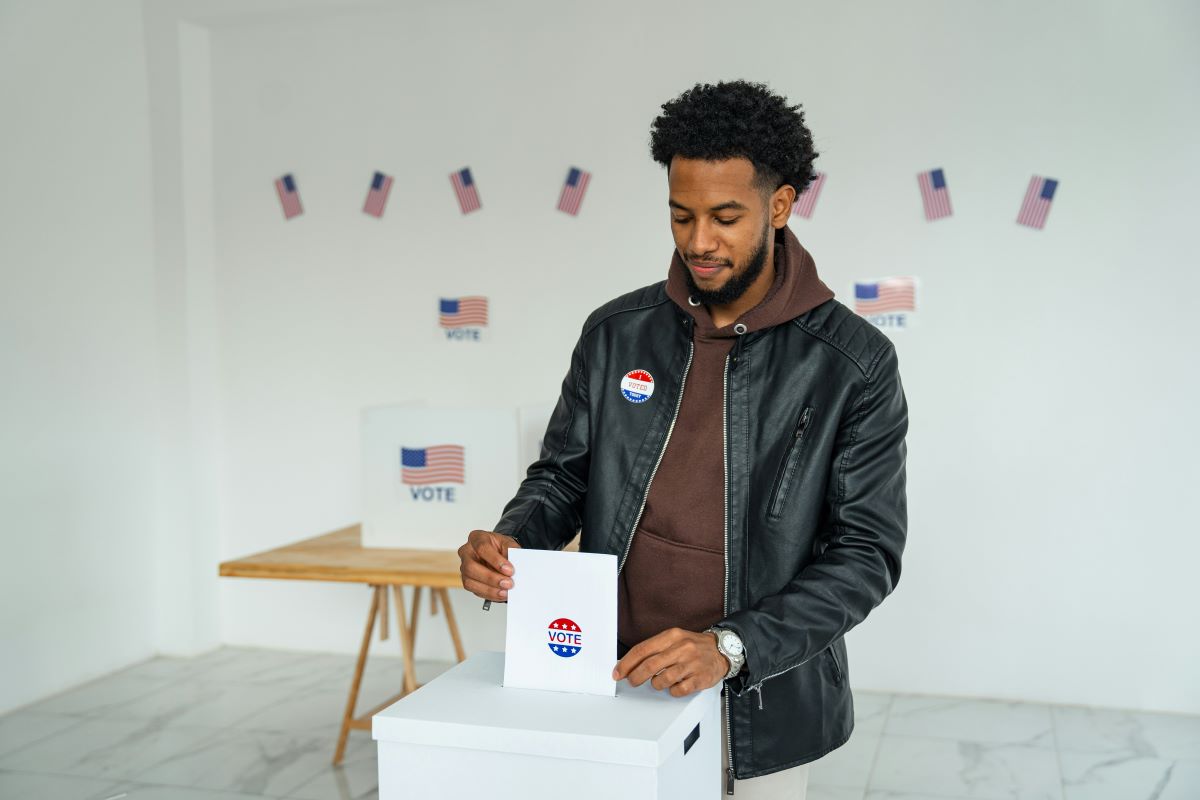
The Safeguard American Voter Eligibility Act, commonly known as the SAVE Act, has generated significant concerns among voting rights advocates regarding its potential impact on Black voters and other traditionally marginalized communities. First introduced in Congress in 2024 and reintroduced in January 2025, the Republican-backed legislation would amend the National Voter Registration Act of 1993 to require Americans to present documentary proof of citizenship when registering to vote or updating their voter registration information.
Current Registration Methods at Risk
One of the most consequential aspects of the SAVE Act would be its effect on existing voter registration methods that millions of Americans currently rely on. According to voter registration data, more than seven million Americans registered to vote by mail in 2022, while nearly 11 million registered online. Under the proposed legislation, these convenient registration options would be severely limited or eliminated entirely.
The SAVE Act would require in-person presentation of citizenship documents such as passports or birth certificates, effectively eliminating mail-in voter registration applications. This would make it impossible for citizens to register by mail. Additionally, 42 states and the District of Columbia currently offer online voter registration to provide voters with a flexible, modernized way to register or update their information2. The SAVE Act would force these systems to be overhauled or eliminated entirely since documentary proof of citizenship must be physically presented to election officials.
Disproportionate Impact on Black Voters
Research indicates that the elimination of mail-in and online registration would disproportionately affect Black Americans and other voters of color. According to studies, approximately 11 percent of Americans of color lack ready access to citizenship documents, compared to about 8 percent of white Americans. This disparity means Black voters would face greater obstacles in the registration process.
The requirement to register in person presents a significant barrier for Black Americans living in rural areas or urban centers with limited access to transportation. Many would need to take time off work during government office hours and travel to election offices, which may be particularly burdensome for those working multiple jobs or lacking reliable transportation options.
Genesis Robinson, director of Equal Ground Fund, told Newsweek that the SAVE Act “essentially acts as a poll tax, something Black voters are all too familiar with—having to pay to access the ballot.” This comparison refers to the historical barriers imposed from the Reconstruction Era through the Civil Rights Era that effectively prevented many Black voters from accessing the ballot box.
Third-Party Registration Drives at Risk
The SAVE Act would also have profound implications for voter registration drives that have traditionally been effective in reaching Black communities. According to voting rights groups, the legislation would “effectively be the end of all third-party voter registration drives” since only a government official could review and accept proof of citizenship. Organizations would no longer be able to collect voter registration forms or use tablets to direct people to online registration portals.
This change would be particularly significant for Black churches, community organizations, and civil rights groups regularly conducting voter registration campaigns. These drives have historically been vital in increasing civic participation in Black communities, especially in areas where government services are less accessible.
Current Status and Opposition
The SAVE Act passed the Republican-controlled House in 2024 but stalled in the Senate. It was reintroduced in January 2025 as H.R. 22 and is currently pending review in the House of Representatives. A companion bill, S.128, has also been filed in the Senate, where it would likely need to overcome the filibuster.
Opposition to the bill has been substantial, with 145 organizations signing a letter stating that the SAVE Act “is both unnecessary and dangerous.” Critics argue that the legislation addresses a problem that does not exist at a meaningful scale. In a Newsweek article, a 2024 audit by Georgia Secretary of State Brad Raffensperger found only 20 non-citizens on the state’s voter rolls out of 8.4 million registered voters—a mere 0.00024 percent.
The Campaign Legal Center has warned that the SAVE Act “would impose substantial new requirements on Americans for voter registration, making it more difficult for eligible citizens to register and vote. It would disrupt mail and online registration systems, particularly in smaller and rural areas that lack the financial resources to implement these changes without federal funding, which the bill does not provide.”
Concerns About Voter Roll Purges
Another aspect of the SAVE Act that alarms voting rights advocates is its requirement for states to conduct continual reviews of voter rolls to identify and remove non-citizens. Past purges using similar methods have resulted in the improper removal of eligible citizens from voter rolls.
The Campaign Legal Center reports that in a recent voter purge in Alabama that used data from the state’s Department of Labor, nearly 94 percent of those removed were U.S. citizens. An analysis by the North Carolina State Board of Elections found that approximately 98 percent of individuals identified by the DMV as non-citizens were actually U.S. citizens.
These inaccuracies in voter roll purges have historically affected Black voters and other marginalized communities at higher rates, further compounding concerns about the Act’s potential discriminatory impact.
Current Safeguards Against Non-Citizen Voting
Advocates point out that it is already illegal for non-citizens to vote in federal elections, with penalties including fines, jail time, and potential deportation. Election officials already use state and federal data from the U.S. Department of Homeland Security and the Social Security Administration to verify an individual’s citizenship and eligibility.
The Bipartisan Policy Center’s analysis of The Heritage Foundation’s Election Fraud Cases database found only 77 instances of non-citizens casting a ballot between 1999 and 2023—an average of just three votes per year. This data suggests that non-citizen voting is extremely rare and has never affected the outcome of an election.
For Black voters and other historically marginalized communities, the SAVE Act represents what many voting rights advocates view as a significant step backward in voting access. By eliminating convenient registration methods like mail-in and online options, requiring in-person presentation of documents that many Americans do not readily possess, and mandating potentially error-prone voter roll purges, the legislation could create substantial barriers to political participation.
As the debate over the SAVE Act continues, voting rights organizations encourage citizens to contact their representatives to express their concerns about the legislation’s potential impact on fundamental democratic rights. The outcome of this debate will have significant implications for the future accessibility of the electoral system for Black voters and all Americans.