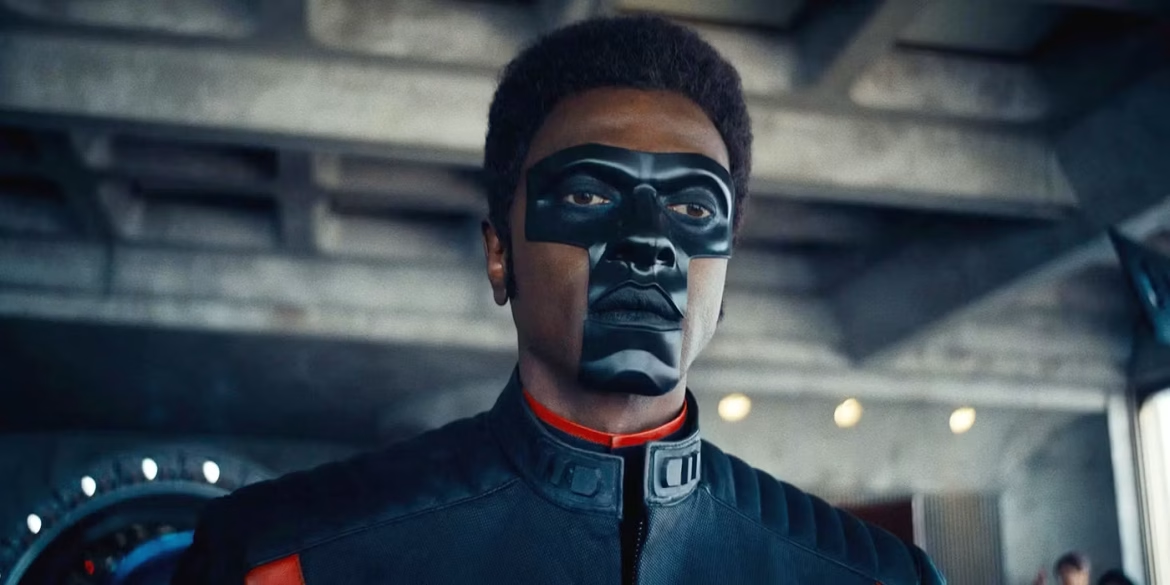
Edi Gathegi’s Mr. Terrific brought something rare to James Gunn’s Superman. He showed a Black man displaying intellectual superiority without shame or apology. Furthermore, he didn’t need to make others comfortable. In one performance, Gathegi shattered decades of conditioning. This conditioning taught Black men to temper their brilliance. Moreover, it made them soften their confidence. Additionally, it forced them to apologize for taking up space where their intelligence might be perceived as a threat to others.
This representation matters significantly. Black men face a persistent double standard when it comes to confidence. Consequently, Mr. Terrific’s swagger directly challenges this bias.
The Confidence Penalty Black Men Pay
Research reveals troubling realities about how society perceives Black men’s confidence versus white men’s confidence. Studies show clear discrimination patterns. For instance, Black athletes displaying confident behaviors face labels of “arrogant.” Meanwhile, white athletes exhibiting identical behaviors are perceived as “competitive.” Therefore, the same traits that make white men appear decisive make Black men seem threatening.
Muhammad Ali exemplified this double standard throughout his career as a boxer. Ali “redefined Black masculinity.” He showed Black men they “could be just as unapologetic as the champ in voicing black pride.” However, critics widely attacked his confidence and verbal artistry. His famous proclamations, such as “I am the greatest” and “I shook up the world,” drew labels of arrogance. Conversely, similar displays from white athletes were celebrated as a sign of competitive spirit.
Recent studies on Black college athletes reveal disturbing patterns. They “often altered their self-presentation in predominantly white settings to avoid feeding into biased assumptions.” Many would often dress up for class to avoid the ‘dumb jock’ stereotype.” Thus, this research exposes how Black men must constantly manage their presentation. They do this to avoid seeming threatening.
The bias extends to leadership positions. Research demonstrates an “implicit pro-White leadership bias.” Participants “reacted significantly faster when ethnically White names and leadership roles paired together.” Subsequently, they responded more slowly when researchers paired “ethnic minority names and leadership traits.” Hence, society more readily associates leadership qualities like “decisive,” “intelligent,” “self-confident,” and “ambitious” with whiteness than Black identity.
Origins of Unapologetic Excellence
Michael Holt’s origins help us understand why Mr. Terrific’s swagger resonates so powerfully with Black men. John Ostrander and Tom Mandrake created the character. He first appeared in Spectre #54 in June 1997. Additionally, his origin story diverges from typical superhero narratives. Personal tragedy and transformation are the roots of his story.
Michael contemplates suicide after losing his wife, Paula, and unborn child in a car accident. The Spectre intervenes. The spirit tells him about the original Mr. Terrific, Terry Sloane. This inspires Michael to channel his pain into purpose. This origin speaks to themes of resilience and community service. These themes resonate strongly within Black communities. They represent the idea of transforming personal trauma into a force for helping others.
Michael’s motto, “Fair Play,” becomes more than just a slogan; it becomes a guiding principle. Instead, it represents a commitment to justice. This commitment carries particular weight when viewed through the lens of racial equity. Black men have historically faced denial of fair treatment in society. Therefore, a Black superhero advocating for fairness carries symbolic weight. This extends far beyond entertainment.
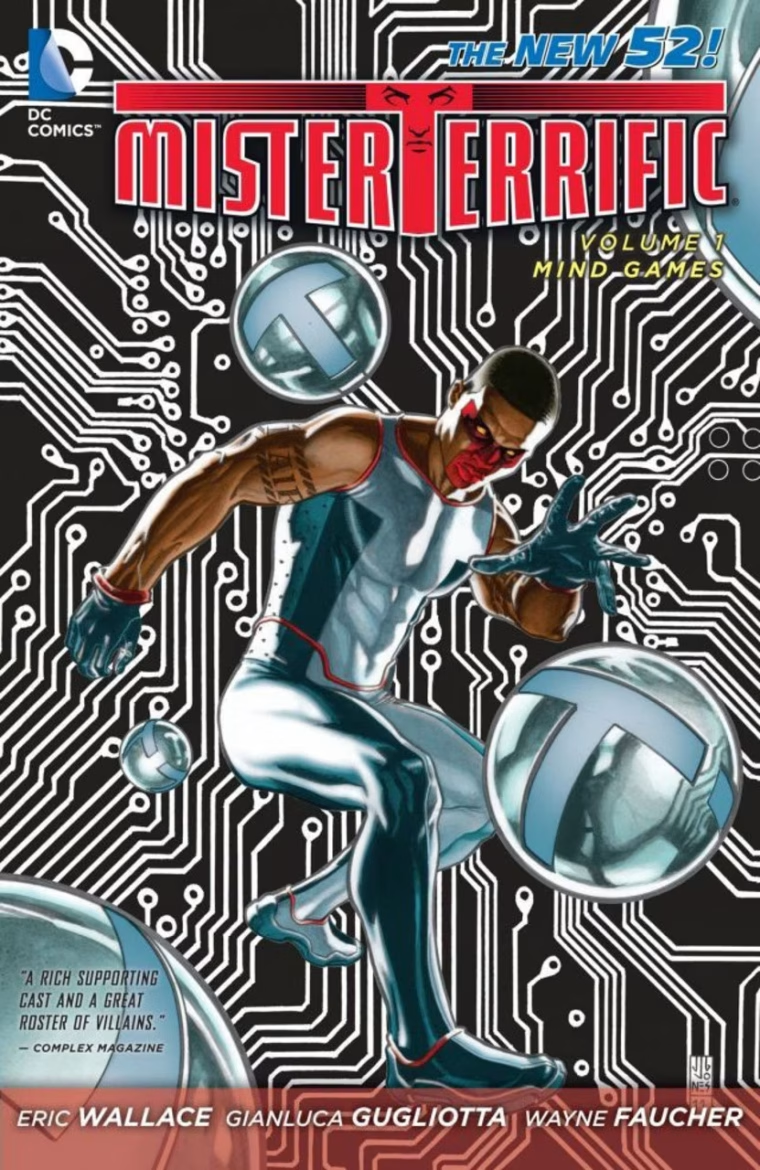
Michael Holt distinguishes himself through intellectual supremacy without apology. Comics note him as the third-smartest person in the world. He holds fourteen PhDs in multiple fields. These include engineering, law, and mathematics. Furthermore, his signature T-Spheres represent innovation and mastery of science. These floating technological marvels attack enemies, transmit messages, and allow him to defy gravity. Moreover, they highlight fields where Black excellence has historically faced underrepresentation.
A Pattern of Leadership Without Apology
Michael Holt’s comic book journey provides crucial context. It explains why his cinematic swagger holds such significance for Black men. First, he joined the Justice Society of America in the 1999 JSA series. Holt quickly became a central figure. Eventually, the team elected him as chairman despite him not actively seeking the position. This storyline reflects real-world dynamics. Black leaders often find themselves thrust into positions of responsibility during times of crisis. More importantly, it shows how they can excel in those roles without diminishing their confidence.
His most significant character development came during the “One Year Later” storyline. Holt joined Checkmate, the United Nations Security Council’s intelligence agency. He served as the White King in their chess-based hierarchy. This role showcased a Black character in a position of global authority. Additionally, he navigated morally complex international incidents and internal power struggles. He accomplished this with the same intellectual swagger that defines his character.
The 2011 New 52 reboot gave Mr. Terrific his first solo series. Eric Wallace wrote “Mister Terrific: Mind Games.” The series ran only eight issues before cancellation. However, it provided important representation as one of the few solo titles starring a Black protagonist. The series tackled complex themes. It included a space-based storyline where Terrific led alien slaves in revolt against cosmic oppressors. This narrative inevitably evoked historical parallels to the African American experience.
Intellectual Dominance in Action
The 2021 DC animated film Injustice provides a compelling demonstration of Mr. Terrific’s intellectual swagger. In the film, he engages Superman in a chess match that evolves into a philosophical debate about authoritarian control. This scene perfectly illustrates why his confidence matters so much to Black men watching.
Mr. Terrific uses the chess game to show Superman “the flaw in his thinking.” He demonstrates “how this one action could have dangerous repercussions for everyone.” The scene explores “rules and regulations and how far we can go before we’re actually really taking away people’s rights to choose and just exist in this world.” Voice actor Edwin Hodge explained the significance of this.
During the chess match, Mr. Terrific puts Superman in check three times before achieving checkmate. Consequently, he demonstrates his ability to outmaneuver one of the world’s most powerful beings through pure intellect. The scene illustrates how his genius extends beyond technological innovation. Additionally, it shows strategic thinking and moral reasoning. These qualities make him an essential voice in discussions about power and responsibility.
This scene proves revolutionary because Mr. Terrific doesn’t defer to Superman’s power or status. He doesn’t soften his intellectual challenges. Furthermore, he doesn’t apologize for being smarter. Instead, he simply demonstrates his superiority with calm confidence. This forces even Superman to acknowledge his brilliance. For Black men conditioned to make their intelligence less threatening, this representation transforms everything.
Mr. Terrific: Swagger Without Apology
Mr. Terrific embodies all these traits without apology or diminishment in Gunn’s Superman. He operates with the assurance of someone who knows he’s the smartest person in most rooms. Crucially, the film celebrates this rather than punishing it. Additionally, he makes decisive choices in crisis situations. He openly displays intellectual approaches to problems. Moreover, he shows ambition in his vision for justice. The film doesn’t require him to humble himself about his abilities. Furthermore, he doesn’t need to soften his edges. This marks a radical departure from how films typically portray Black intellectual characters.
This swagger roots itself in genuine intellectual supremacy and hard-earned wisdom born from personal tragedy. His journey from contemplating suicide to becoming one of the world’s most brilliant heroes demonstrates something powerful. Black excellence can emerge from pain and transform it into purpose.
Breaking the Pattern of Diminishment
Gathegi’s journey to this role provides crucial context for understanding its significance. Previously, he played Darwin in X-Men: First Class (2011). Darwin possessed god-tier abilities that should have made him one of the most formidable mutants in the X-Men universe. Instead, filmmakers inexplicably killed him off early. This occurred in a manner that made no logical sense, given his powers. Producers promised the character would return, but that never happened.
Gathegi has since called it “a huge miss” and “bad representation.” He recognizes it as part of a broader pattern. This pattern reveals how filmmakers often underutilize or overlook Black characters with extraordinary potential. The contrast with his Mr. Terrific experience appears stark. His X-Men role suggested “you can be the most powerful mutant in the world and they’ll never let you reach your full potential.”
Gathegi states that his current role “is kind of undoing the wrongs of Darwin.” The difference is clearly evident in both the character’s treatment and the actor’s confidence in the role’s future.
Dawin from X-Men First Class
Beyond Token Representation: A Commitment to Sustained Excellence
James Gunn positions Mr. Terrific as an integral part of the “Justice Gang” rather than Superman’s technical support. This distinguishes his role in Superman. Gunn confirmed that Mr. Terrific has “a big part of the plot.” This means narrative importance and character agency, not just presence.
This approach recognizes that meaningful representation requires more than just showing up. Instead, it demands that Black characters become essential to the story. Black men have long seen themselves relegated to supporting roles or killed off when convenient. Therefore, this represents a fundamental shift in how filmmakers can tell their stories.
The success has already sparked discussions about expanded representation. Reports indicate that “Gunn is considering TV spinoffs for characters like Mister Terrific.” This potential expansion represents more than additional content. Rather, it signals a commitment to sustained Black representation rather than one-off appearances. Mr. Terrific possesses a rich comic book history of leadership roles and complex storylines. This provides substantial material for future projects. These could continue showcasing his intellectual swagger on an even larger scale.
Cultural Impact: Permission to Be Brilliant
Black men watching Mr. Terrific receive a revolutionary message. You don’t have to diminish your intelligence to make others comfortable. Additionally, you don’t have to apologize for being the smartest person in the room. Furthermore, you don’t have to soften your edges or lower your voice when discussing your achievements.
This representation proves particularly crucial for young Black men pursuing careers in STEM fields. They often face environments where people question their intellectual capabilities. Others interpret their confidence as arrogance. Seeing Michael Holt positioned as one of the world’s smartest individuals sends a clear message. Someone who can outthink Superman himself and lead teams without seeking permission demonstrates intellectual potential and achievement. This requires no false modesty.
The character’s origin adds another layer of meaning for Black men who have faced their own traumas and setbacks. Michael Holt’s transformation from suicidal despair to world-saving brilliance demonstrates something powerful. Pain can transform into power.
The Ripple Effect
Mr. Terrific’s swagger matters because it gives Black men permission to exist unapologetically. This applies to spaces where people have questioned their intelligence. Additionally, it covers situations where others have misconstrued their confidence. Furthermore, it includes places where people have underestimated their potential. When Black children see Michael Holt outthinking Superman himself, they learn a valuable lesson. He puts the Man of Steel in checkmate. They discover that their brilliance doesn’t need tempering by false humility. They don’t need to fear others’ discomfort. Culture has long demanded that Black men choose between being smart and being confident. However, Mr. Terrific’s intellectual swagger offers a third option. You can be both, without apology.
That distinction between representation and true narrative importance makes all the difference. Society has told Black men for too long that their confidence threatens others. Additionally, it has labeled their intelligence as suspect. Furthermore, it has been called their swagger inappropriate. From tragedy to triumph, from pain to purpose, from comic book leadership to cinematic excellence. This happens one brilliant, unapologetic performance at a time.
This article was written and researched with assistance from Claude AI